Key Takeaways
- The decisions behind the most profitable companies in America aren't about scale. They're about pricing, recurring revenue, and where you say no, and they work the same at $500K as at $500B.
- Raise prices on what you can defend. A price increase backed by better service or a stronger guarantee drops almost straight to profit, because your costs don't move with it.
- Turn one-time work into recurring revenue. Predictable income compounds and steadies every month.
- Sell more to the customers you already have. It's far cheaper than winning new ones.
- Grow output per employee before you add headcount, and drop the customers and products that quietly lose money.
The lessons are in the principles
It's easy to look at the most profitable companies in America and decide none of it applies to you. You're not Apple. You're not going to run Visa's margins, and you don't need to.
But scale isn't what made these companies profitable. Specific decisions were made, and most of those decisions are about how you price, how you earn revenue, and where you spend your effort. Those choices are the same whether you do $500,000 a year or $500 billion. Here are five worth stealing, what each one did for the company that made it, and how it looks at your size.
Principle 1: Charge a premium you can defend
Apple doesn't win by being the cheapest. Its brand lets it charge more, and the payoff shows up in margin. Apple's services business (the App Store, AppleCare, advertising) runs about a 74% gross margin, against roughly 37% on its physical products (Visual Capitalist). Same company, double the margin, because services carry pricing power and almost no cost per extra sale.
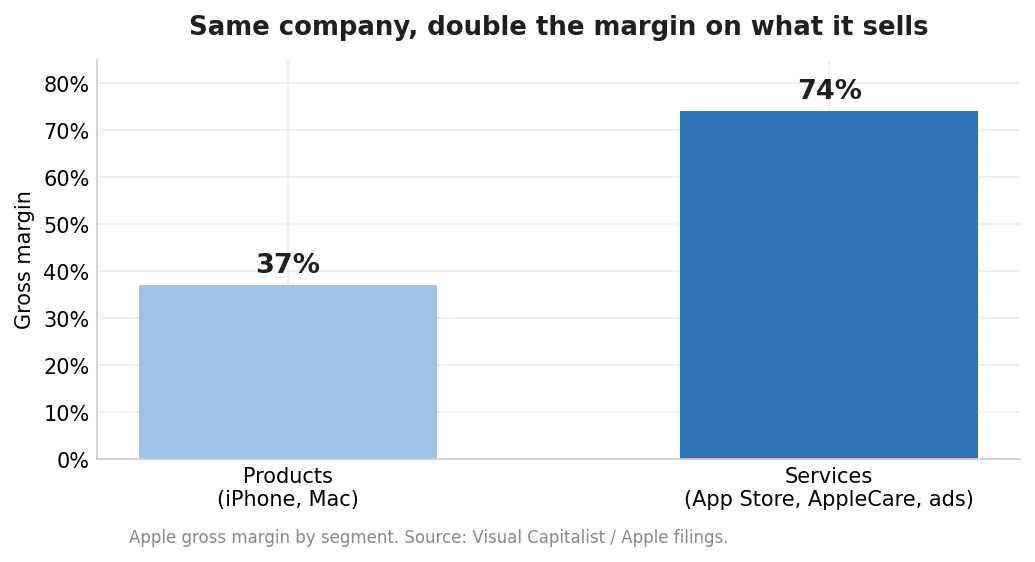
That margin gap is a big reason Apple turns revenue into so much more profit than a company competing on price.
Lesson Learned: Most small businesses underprice out of fear. A price increase you can stand behind, backed by faster turnaround, better service, or a stronger guarantee, goes almost straight to profit, because your costs don't rise with the price. Start with your least price-sensitive offer and anything you haven't repriced in over a year.
Principle 2: Turn one-time sales into recurring revenue
Until 2012, Adobe sold its software in a box for a one-time payment of around $1,800. In 2013 it stopped and moved everyone to a monthly Creative Cloud subscription. The backlash was loud: a petition drew more than 50,000 signatures, and revenue actually dipped the next year, from about $4.4 billion to roughly $4.05 billion.
Then it compounded. Adobe passed $12.9 billion in revenue by 2020 and about $21.5 billion by 2024, with more than 30 million subscribers and renewal rates above 90% (Adobe filings).
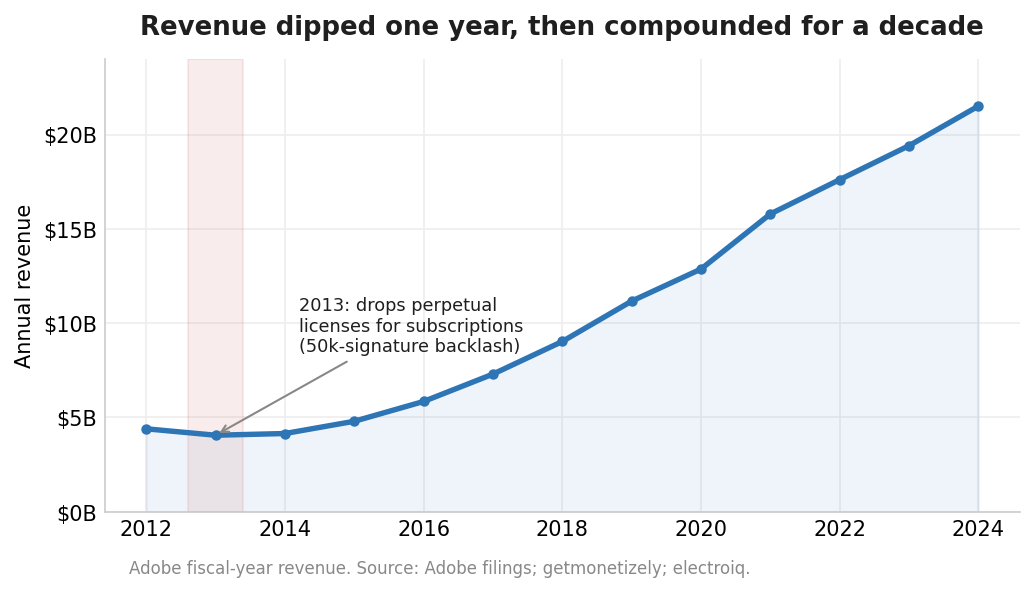
One-time sales reset to zero every month. Recurring revenue starts each month with money already on the books, which is why it compounds and why investors value it far more highly.
Lesson Learned: Take something you already do as a one-off and package it as a plan, retainer, membership, or service agreement. You don't need to convert everything. Getting even 20% of revenue onto a recurring basis changes how predictable next month feels.
Principle 3: Sell more to the customers you already have
Amazon's most valuable growth lever isn't new shoppers, it's getting existing ones to buy more often. A Prime member spends about $1,170 a year on Amazon, against about $570 for a non-member, roughly two to one, and that gap has held for years (Consumer Intelligence Research Partners, 2024). Prime exists to deepen the relationship, not just to collect a fee.
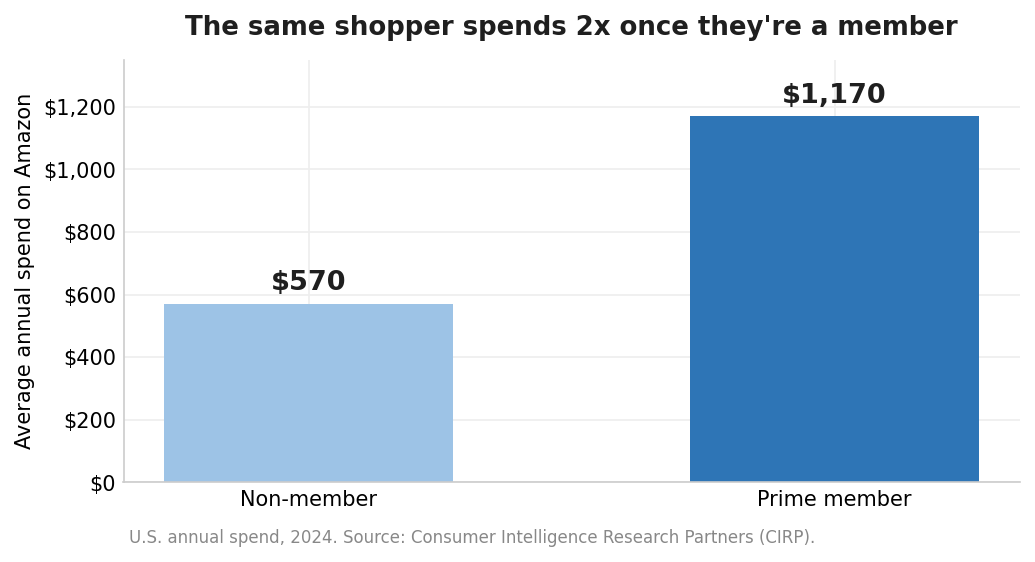
Winning a brand-new customer is one of the most expensive things a business does. Getting someone who already trusts you to buy again is one of the cheapest.
Lesson Learned: Build the second offer: the add-on, the upgrade, the renewal, the follow-up. Then put it in front of the people who have already bought from you. That list is the most profitable marketing you own, and most owners never work it.
Principle 4: Grow output per employee before headcount
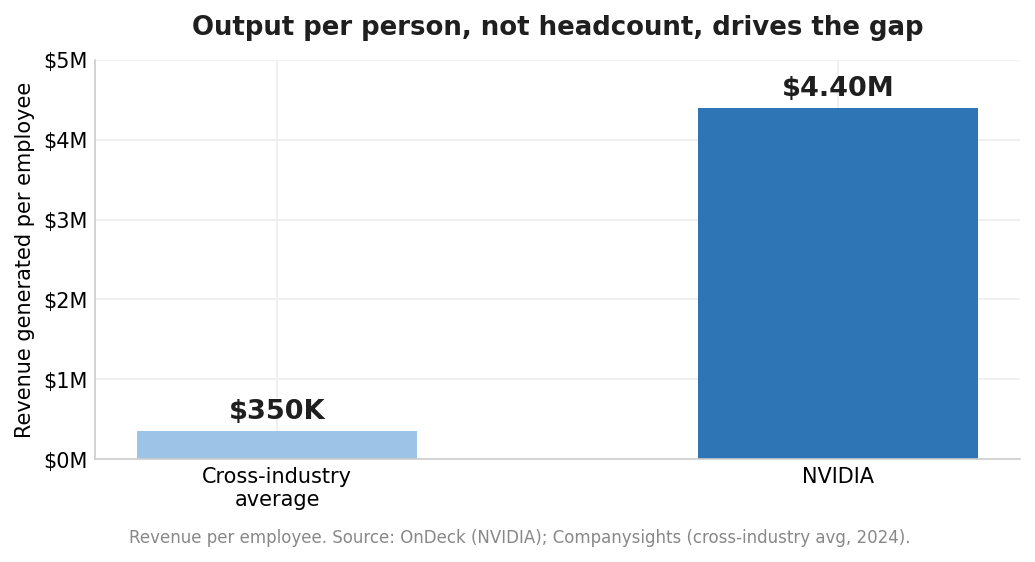
The most profitable companies win on output per employee, not on having the most employees. NVIDIA, the semiconductor company whose chips power most of the world's AI systems, generates roughly $4.4 million of revenue per employee, against a cross-industry average closer to $350,000 (OnDeck; Companysights). The lesson isn't the specific number, it's the direction: profit comes from leverage per employee, not from a bigger payroll.
As we covered in the payroll piece, your next hire is a commitment of 1.25 to 1.4 times their salary once taxes and benefits are in. That's the most expensive way to add capacity.
Lesson Learned: Before you hire, run this diagnostic. When output is low or something breaks, the problem is usually one of three things: a People issue (the wrong person in a role), a Systems issue (the wrong tools or no tracking), or a Process issue (no clear steps for how things get done). Fix the actual constraint first. Find the lowest-value work eating your team's week, the manual task or the low-margin service, and cut or automate it. Freeing your existing team to do more profitable work is cheaper than hiring, and it shows up faster.
Principle 5: Drop your worst customers and products
When Steve Jobs returned to a nearly bankrupt Apple in 1997, the company sold around 350 products and was losing about $1.04 billion a year. Within weeks he cut the line to roughly 10. One year later, Apple turned a $309 million profit (Entrepreneur; Inc.; Walter Isaacson's biography).
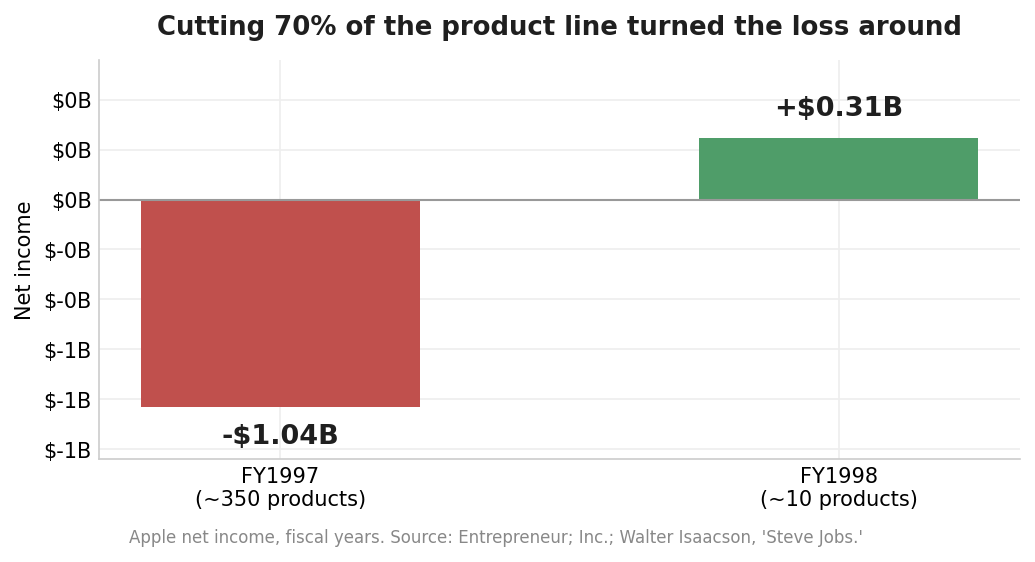
Most of that turnaround came from subtraction. Doing a few things extremely well beat doing many things adequately, and it freed up money and attention for the products that actually worked.
Lesson Learned: Rank your customers and products by profit, not revenue. The bottom slice is often costing you money and time you could move to your profitable core. Saying no to the wrong work is a profit strategy, not a missed opportunity. (See Lesson 5 — doing a few things really well pays off.)
Where to start
You don't need to implement all five at once. Pick the one that fits where your business is right now. For most owners, pricing is the fastest, because a defensible increase drops straight to profit with no new cost. Recurring revenue is the most durable, because it changes the business permanently. Choose one, measure what it does over a quarter, then add the next.
.png)
.png)